
Beauty
What Is Pueraria Mirifica? The Thai Herb Behind CANAE
2026-07-16
Pueraria Mirifica, or Kwao Krua Kao, is a Thai botanical used for generations in herbal beauty rituals. Learn its origins and role in CANAE's breast care line.
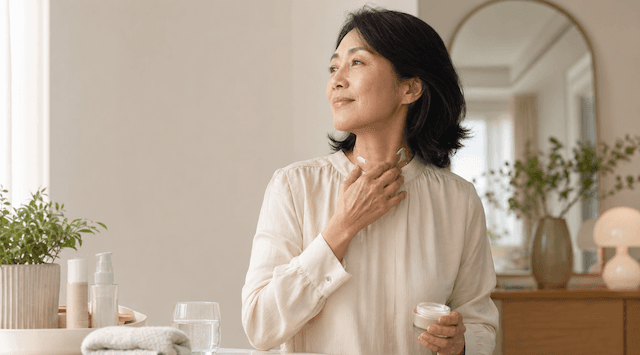
If you've spent any time reading ingredient lists for natural body care, you've likely come across Pueraria Mirifica. It's the botanical extract at the heart of CANAE's breast care collection, but the plant itself has a much longer story — one rooted in the forests of Thailand and generations of Thai herbal tradition.
What Is Pueraria Mirifica?
Pueraria Mirifica is a tuberous climbing vine native to Thailand, known locally as Kwao Krua Kao, or White Kwao Krua. It belongs to the legume family and is found growing wild in the mountainous forests of northern and northeastern Thailand. For close to a century, Thai herbal medicine has used its tuber as a botanical ingredient in body-care preparations, and today it's the signature extract in CANAE's Breast Serum X5, Natural Breast Cream, and Breast Enhancement Cream Mask.
Where Pueraria Mirifica Comes From
The plant grows specifically in the highland forests of northern and northeastern Thailand, where it has historically been harvested by local communities. As a wild-growing tuberous vine, Pueraria Mirifica isn't cultivated at the same scale as more common crops — part of why it has remained closely associated with Thai herbal specialists rather than becoming a mainstream global ingredient until more recently.
Kwao Krua Kao vs. Red and Black Kwao Krua
One detail that often gets lost outside Thailand: Kwao Krua Kao (White Kwao Krua) is one of three related plants that share the "Kwao Krua" name. Thai herbal tradition draws a clear distinction between the white, red, and black varieties, each treated differently in traditional practice. Pueraria Mirifica refers specifically to the white variety — the one Thai herbalists have prepared as part of body-care rituals passed down through generations, often from mothers to daughters.
The Compounds Behind Pueraria Mirifica
Botanically, Pueraria Mirifica is known for containing phytoestrogens — plant compounds structurally similar to estrogen — including miroestrol and deoxymiroestrol, along with isoflavones such as genistein and daidzein. These compounds are part of why the plant has long been of interest in Thai herbal practice and, more recently, in cosmetic formulation.
It's worth being clear about what that means in a cosmetic context: CANAE's products are formulated to cleanse, moisturize, and support the look and feel of skin as part of a daily beauty ritual. They are not intended to diagnose, treat, cure, or prevent any condition, are not a hormone therapy, and are not a substitute for medical care. Anyone with hormone-sensitive health conditions, or who is pregnant or breastfeeding, should speak with a doctor before adding any Pueraria Mirifica product to their routine.
A Century of Traditional Use in Thailand
Thai folklore medicine has used Pueraria Mirifica for nearly a hundred years, traditionally regarding it as a rejuvenating tonic for women. That history is part of what distinguishes it from many newer skincare ingredients — it isn't a lab discovery marketed as a trend, but a plant with a documented place in Thai herbal practice, prepared and shared within families long before it appeared in a cosmetic formula.
A Protected Piece of Thai Heritage
Pueraria Mirifica's cultural and botanical significance is significant enough that it's recognized and protected by the Thai government today. That protection reflects how deeply the plant is woven into Thailand's herbal heritage — it isn't just a beauty ingredient, but a piece of the country's botanical history.
How CANAE Uses Pueraria Mirifica
CANAE builds its entire breast care collection around Pueraria Mirifica, included at a concentrated level to support smoother, firmer-looking skin:
- Breast Serum X5 — a 5x concentrated formula designed for a more intensive daily or evening step.
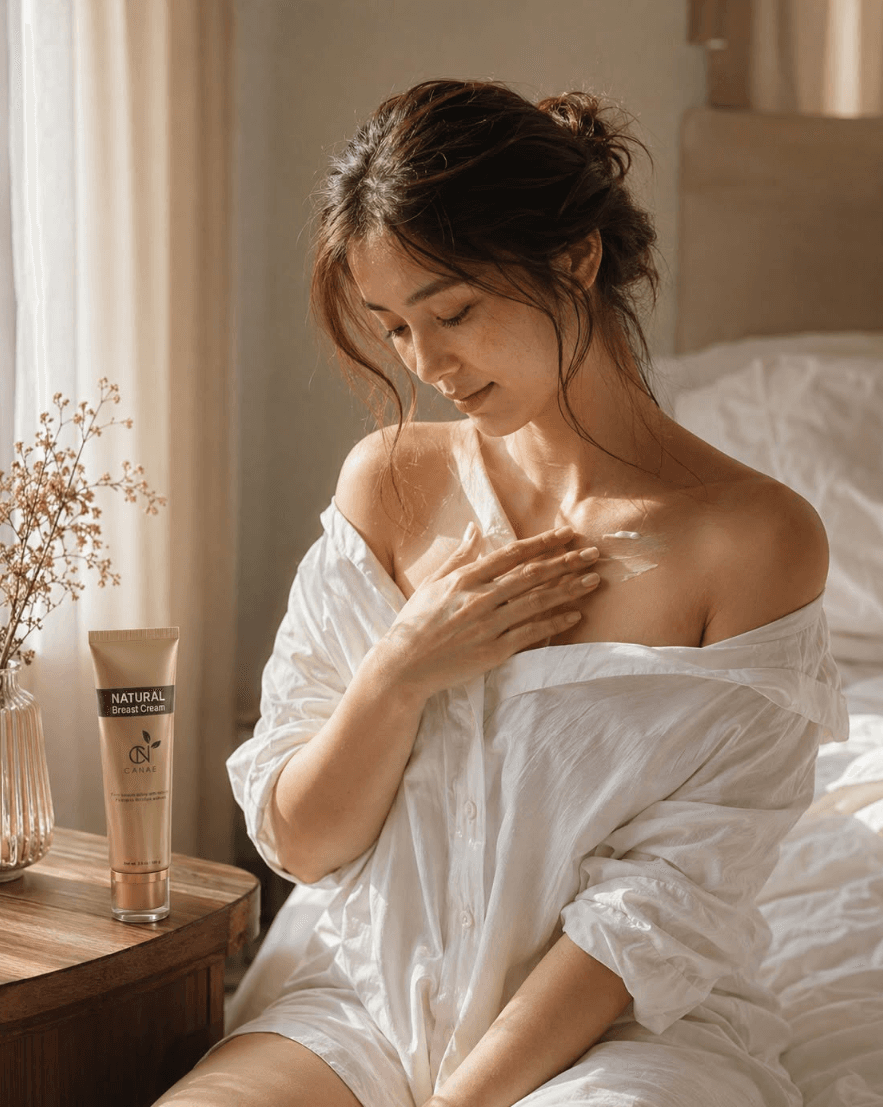
- Natural Breast Cream — a richer, everyday texture for a simpler cream-based routine.
- Breast Enhancement Cream Mask — paired with coconut, designed as a weekly ritual rather than a daily one.
You can see the full ingredient breakdown, including how Pueraria Mirifica compares to CANAE's other botanicals, on the Ingredients page.
Bringing Pueraria Mirifica Into a Daily Ritual
Thai herbal tradition treats Pueraria Mirifica less as a quick fix and more as part of a consistent ritual — the same care, repeated regularly. That's the approach CANAE takes too: pairing Pueraria Mirifica formulas with a simple daily rhythm of cleansing, moisturizing, and massaging. For a full walkthrough of how to build that ritual around CANAE's collection, see Thai Herbal Skincare: A Natural Beauty Ritual from CANAE.
Frequently Asked Questions
Is Pueraria Mirifica the same as Kwao Krua? Kwao Krua is a broader Thai name covering three related plants — white, red, and black. Pueraria Mirifica refers specifically to the white variety, Kwao Krua Kao.
Is Pueraria Mirifica safe to use in skincare? CANAE's Pueraria Mirifica products are formulated as cosmetics for topical use as part of a self-care routine. They are not intended to treat any medical condition. Anyone with hormone-sensitive conditions, or who is pregnant or breastfeeding, should consult a doctor before use.
Where does CANAE source its Pueraria Mirifica? Pueraria Mirifica used in Thai herbal products is traditionally sourced from the highland forests of northern and northeastern Thailand, where the plant grows wild.
What's the difference between the Breast Serum X5 and Natural Breast Cream? Both use Pueraria Mirifica as the signature extract. The Breast Serum X5 is a 5x concentrated formula suited to a more intensive step, while the Natural Breast Cream offers a richer, everyday texture. See the Ingredients page for a full comparison of CANAE's botanicals.
CANAE products are cosmetics formulated to support the appearance of skin as part of a self-care routine. They are not intended to diagnose, treat, cure, or prevent any condition and are not a substitute for medical care. Individual results can vary. See CANAE's [Cosmetic Disclaimer](/disclaimer) for full details.